
- Arrest Records
- Judgments
- Bankruptcies
- DUIs & DWIs
- Felonies
- Warrants
- Jail Records
- Lien Records
- Sex Offenses
- Misdemeanors
- Criminal Records
- Federal Dockets
What are North Carolina Court Records?
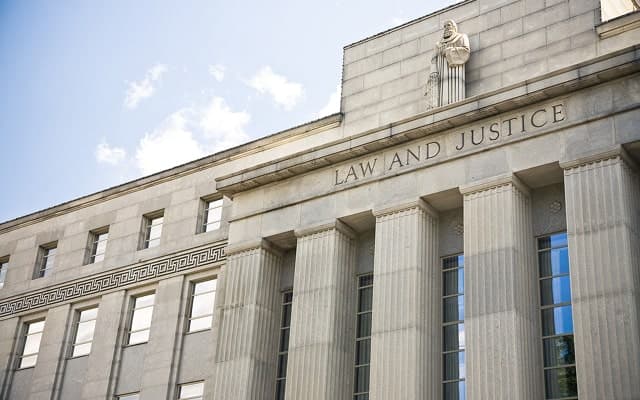
North Carolina is home to over 11.2 million residents, making it the ninth most populous state in the country. Residents of the state are served by a unified court system consisting of three divisions, including the appellate division, superior court division, and district court divisions. North Carolina courts process over 2 million new cases annually, including all types of civil and criminal cases.
Each court within the court system maintains information about each case it handles, including case files containing details of the parties in a legal proceeding, what happened during the trial or hearing, and the court's decision. This information is generally regarded as court records. In North Carolina, court records provide context for the court's decisions and promote accountability within the justice system. Common court records in the state include:
Docket Sheets
Dockets are official summaries of proceedings and filings in a case. This usually includes information about the parties and legal representatives involved, dates, and filings in a particular case.
Judgments and Orders
These are official declarations made by a judge to resolve a legal matter. These court records typically outline each party's punishment and responsibilities.
Transcripts
Transcripts are typed verbatim version of what was said during a court proceeding. They are created by the official court reporter in attendance or by listening to an audio recording made by the clerk.
Evidence
This includes physical and document-based materials containing facts and observations about the case.
Court Minutes
They are official records of courtroom proceedings from the beginning to the end of a trial. They include a summary of events such as recesses, testimonies, and official statements.
Pleadings
These are records of petitions, complaints, and statements made by each party in a case describing the party's request to the court.
Briefs
Briefs are arguments written by legal counsel and submitted to the court. These documents explain a party's side of the case and why the court should grant their request.
Types of Court Cases
In North Carolina, court cases are categorized as either civil or criminal matters. Although both cases involve finding out who's at fault in a matter, they employ distinct methods and standards of proof to achieve this objective.
Civil Cases
Civil cases seek to resolve disputes between individuals or organizations. These types of cases typically ask the court to protect a private civil right or to grant a civil remedy to one party that has suffered some type of loss as a result of the actions of another. Civil cases are initiated when one party (plaintiff) files a lawsuit against another (defendant). Common reasons for such lawsuits include breaches of contract, property damage, disputes over tenancy, or bodily injury claims.
In the complaint, the plaintiff must specify the reason for the claim and why the court should grant their request. Civil cases are decided using a standard of proof called the preponderance of evidence. This requires the plaintiff to demonstrate that their version of the facts is more likely than not.
Criminal Cases
In criminal cases, the state files a lawsuit against an individual for breaking the law. Criminal cases seek to uphold the law and guarantee justice by making sure that offenders are punished. Consequently, a person found guilty may face penalties ranging from payment of fines and imprisonment to, in certain situations, the death penalty.
In North Carolina, the district attorney for each district is responsible for filing the lawsuit against criminal offenders. It is the responsibility of the district attorney or their representative to establish, beyond a reasonable doubt, that the defendant has committed the alleged offense. Failure to do so will lead to the dismissal of the charges against the defendant.
What Are the Different Courts in North Carolina
North Carolina operates a unified, statewide General Court of Justice made up of appellate, superior and district court divisions funded by the state. The Judicial Department's net general fund appropriation is about $802 million for fiscal year 2025-26.
| Court Level | Court Name | Jurisdiction | Key Functions |
|---|---|---|---|
| Appellate | Supreme Court | Statewide; seven justices; final authority on state law | Hears appeals of right and discretionary review, including death penalty and constitutional cases, and oversees the court system |
| Appellate | Court of Appeals | Statewide; 15 judges sitting in panels of three | Hears appeals from Superior and District Courts and from many state administrative agencies |
| General Jurisdiction | Superior Court | All 100 counties; felonies and civil cases above $25,000 | Hears felony trials, civil cases over $25,000, appeals from District Court and magistrates, and cases assigned to the Business Court |
| Limited Jurisdiction | District Court | 100 counties; misdemeanors, infractions, civil cases up to $25,000, family and juvenile matters | Handles traffic and misdemeanor cases, divorce, custody and child support, juvenile cases, and probable cause hearings in felony cases |
| Limited Jurisdiction | Magistrates | Each county; civil claims up to $10,000 | Decide small claims and summary ejectments (evictions), issue warrants and conduct initial appearances |
How Many Federal Courts Are in North Carolina?
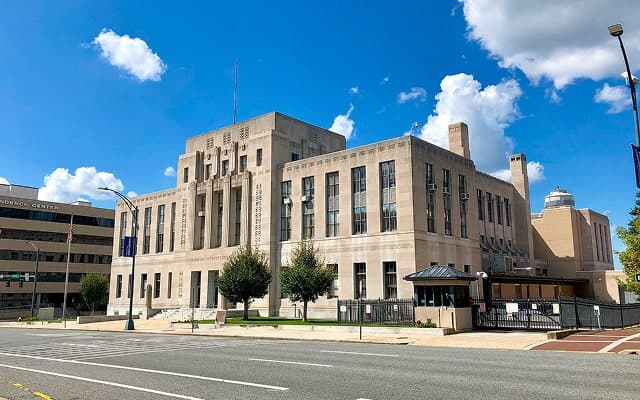
North Carolina has three federal district courts, including the U.S. District Court for the Eastern District of North Carolina, the U.S. District Court for the Western District of North Carolina, and the U.S. District Court for the Middle District of North Carolina. Currently, 9 judges are serving in the federal district courts in North Carolina. They are nominated by the President and confirmed by the United States Senate.
These federal courts handle cases related to federal law, disputes between parties from different states, and bankruptcy matters. If a decision is made in these courts, it can be appealed to the U.S. Court of Appeals for the Fourth Circuit.
How Many Court Cases Are Filed Each Year in North Carolina?
North Carolina's trial courts received an estimated 2.0 million new filings in fiscal year 2023-24, with traffic and criminal matters making up roughly three of every four. Overall, courts disposed of slightly more cases than were filed, a clearance rate of about 105%.
| Case Type | Annual Filings | % of Total | Common Offense/Subtype | Clearance Rate |
|---|---|---|---|---|
| Traffic | 1,135,303 | 56.5% | Infractions and traffic misdemeanors including DWI, speeding and license violations | 108% |
| Criminal | 310,730 | 15.5% | Felonies and non-traffic misdemeanors such as assault, larceny and drug offenses | 113% |
| Civil | 102,457 | 5.1% | General civil, contract, negligence and property cases in Superior and District Court | 92% |
| Small Claims | 208,801 | 10.4% | Magistrate-heard money claims up to $10,000 and evictions | 98% |
| Domestic Relations | 113,352 | 5.6% | Divorce, custody, child support and other family cases | 98% |
| Juvenile | ~20,000 | 1.0% | Delinquency, undisciplined, abuse, neglect and dependency petitions | ~100% |
| Other | 119,126 | 5.9% | Estates and special proceedings such as guardianship and foreclosure | 97% |
| Total | ~2,009,769 | 100% | — | ~105% |
How Do I Look Up Court Cases in North Carolina?

In North Carolina, each court is responsible for maintaining its case files and records. Several courts have established public self-service terminals that allow the public to search for specific court records. Interested persons can look up court cases in the state by visiting the public, self-service terminal located at the clerk of court's office in the specific court that handled the case. These terminals allow users to search cases by providing the defendant's name, case number, or victim's name. In addition, interested persons may request paper records at the clerk of court's office. Note that reproducing copies of court documents attracts a fee.
Those who do not wish to visit the court or clerk's office may search court records remotely. North Carolina courts that have adopted the eCourt program maintain a searchable database where the public can look up court records. You can search court records by name, case number, and attorney.
Number of Active Judges — State & Federal
North Carolina's state courts have about 413 active judges across the Supreme Court, Court of Appeals, Superior Court and District Court, and the state's three federal district courts have 13 active judges. State trial-court counts are approximate and federal counts reflect sitting judges as of 2026.
| Court | Jurisdiction | Active Judges | Selection Method |
|---|---|---|---|
| Supreme Court | Appellate | 7 | Statewide partisan election to eight-year terms |
| Court of Appeals | Appellate | 15 | Statewide partisan election to eight-year terms |
| Superior Court | General | ~109 | District partisan election to eight-year terms; vacancies filled by the Governor |
| District Court | Limited | ~282 | District partisan election to four-year terms; vacancies filled by the Governor |
| U.S. District Court, Eastern District of North Carolina | Federal | 4 | Nominated by the President and confirmed by the U.S. Senate |
| U.S. District Court, Middle District of North Carolina | Federal | 4 | Nominated by the President and confirmed by the U.S. Senate |
| U.S. District Court, Western District of North Carolina | Federal | 5 | Nominated by the President and confirmed by the U.S. Senate |
| Total Active Judges | — | ~426 | — |
What Court Records Are Not Available to the Public in North Carolina?
In North Carolina, specific court records are exempt from public disclosure to protect the privacy of individuals involved. The following categories of records are included under this exemption:
- Adoption Records: Only a final order of an adoption can be accessed by the public. All other information, including the names of biological parents, is confidential.
- Mental Health Commitment Records: Information about individuals committed to a mental facility, such as their names, health status, and location, is confidential information exempt from public disclosure.
- Juvenile Records: All records involving a minor are exempt from disclosure.
- Presentence Report: Presentence reports made for a defendant convicted in any state court in North Carolina are not accessible to the public.
- Settlements: Information about the settlement agreement in a civil case is usually exempt from disclosure. However, in cases involving a minor or someone with some sort of legal disability, this information will become part of court files.
Average Case Processing Time & Clearance Rates
Processing times in North Carolina range from about two weeks for magistrate small claims to a year or more for felony trials in Superior Court, depending on the case type and court. Times shown are median ages of cases at disposition in fiscal year 2023-24.
| Case Type | Court Level | Average Processing Time | Description | Clearance Rate |
|---|---|---|---|---|
| Traffic & Parking | Limited Jurisdiction | 75–130 days | Infractions are usually resolved by payment or a waiver; traffic misdemeanors including DWI are resolved by plea or trial in District Court | 108% |
| Small Claims | Limited Jurisdiction | ~16–30 days | Heard by a magistrate in an informal hearing, with appeal for a new trial in District Court | 98% |
| Misdemeanor Criminal | Limited Jurisdiction | ~180 days | Resolved mostly by plea or dismissal in District Court, with appeals going to Superior Court for a new trial | 119% |
| Civil Cases | General Jurisdiction | ~8 months | Pleadings, discovery, mediation and trial in Superior Court, where the median case closes in 237 days | 93% |
| Domestic Relations | Limited Jurisdiction | 50–120 days | Divorce, custody and support cases in District Court, often resolved by consent order or default | 98% |
| Felony Criminal | General Jurisdiction | 139–366 days | Probable cause hearings in District Court followed by indictment, plea negotiations or trial in Superior Court | 100% |